The Complete Guide to Silver Jhumka Earrings: History, Styles & How to Wear Them
If you've ever been captivated by the gentle sway and soft jingle of bell-shaped earrings, you've already fallen under the spell of jhumkas — one of the oldest and most beloved jewelry traditions in the world.
Whether you grew up watching your mother clasp a pair before a wedding or you've just discovered them scrolling through Instagram, silver jhumka earrings have a way of drawing people in. They're elegant without being fussy, bold without being heavy, and they carry centuries of artisan heritage in every curve.
In this guide, we'll walk you through everything you need to know about jhumka earrings — their fascinating origins, the different styles you'll encounter, how to wear them with both traditional and modern outfits, and how to care for sterling silver so your pieces last a lifetime.
What Are Jhumka Earrings?
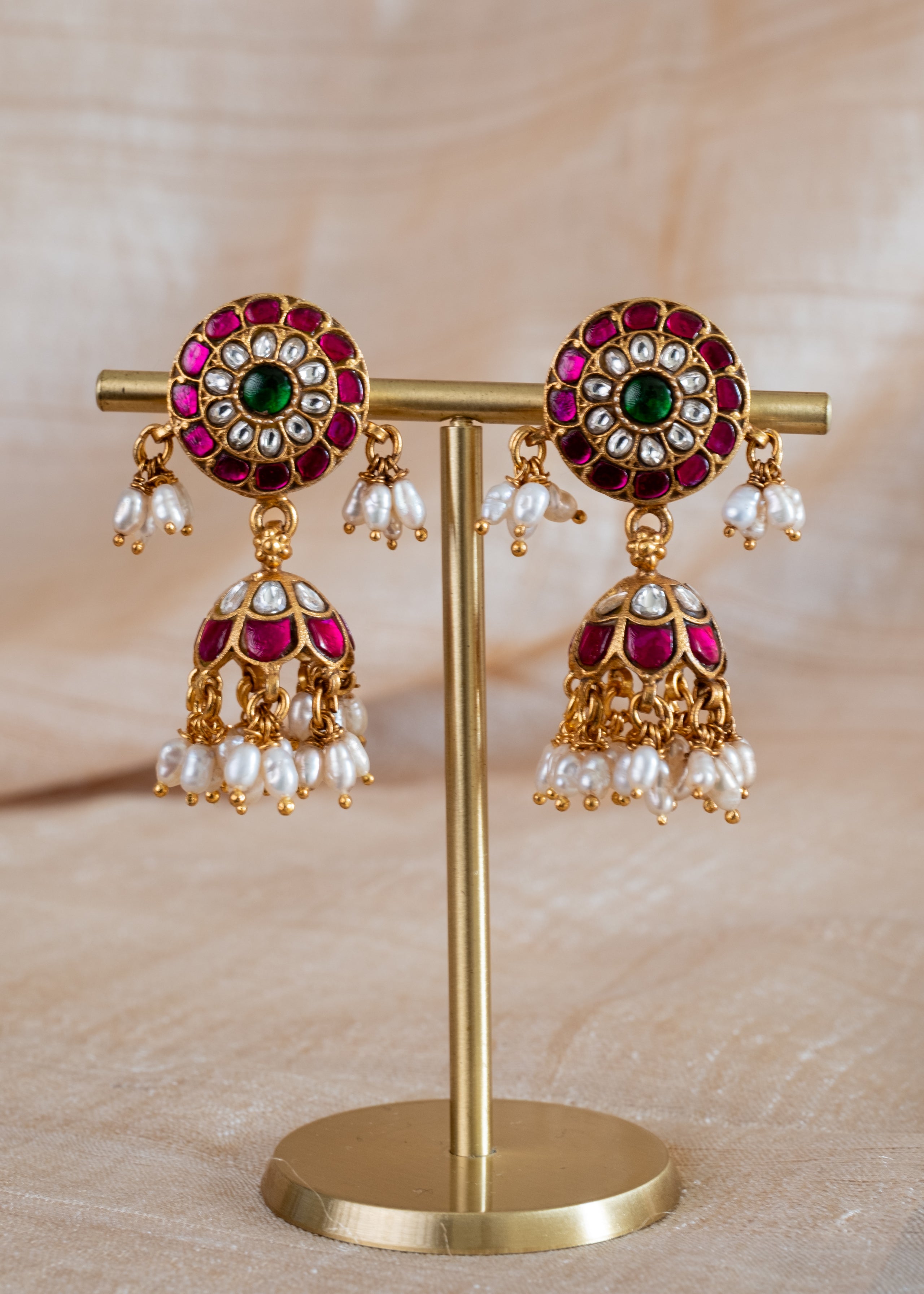
A jhumka is a dome or bell-shaped earring that dangles from the earlobe, often adorned with beads, pearls, filigree work, or intricate engravings. The word "jhumka" comes from the Sanskrit term "jhumki," which loosely translates to "little bells" — a nod to the delicate jingling sound they make with every turn of your head.
Unlike standard drop earrings, jhumkas are distinctive for their rounded, hollow dome shape and the way they move fluidly with the wearer. This movement isn't just beautiful — in Indian tradition, the gentle sound of a jhumka is considered auspicious and was believed to promote positive energy.
A Brief History: From Temple Sculptures to Modern Runways
The story of jhumka earrings stretches back over 2,300 years. Their origins can be traced to the Chola dynasty in South India, where artisans carved them onto temple sculptures as adornments for deities as early as the 3rd century BCE. These weren't just decorative — they were offerings of reverence and beauty.
As centuries passed, jhumkas evolved. During the Mughal era, the design became more opulent, merging with the karanphool (a flower-shaped stud) to create the layered, ornate jhumka style we recognize today. Royal families across Rajasthan, Hyderabad, and Tamil Nadu each developed their own regional variations, making jhumkas a canvas for India's extraordinary artistic diversity.
Bharatanatyam dancers played a significant role in popularizing jhumkas in more recent times. The dance form relies heavily on facial expressions and head movements, and jhumkas — with their fluid motion and rhythmic sound — became an essential part of the dancer's expression.
Today, jhumkas have transcended borders entirely. They're worn at weddings in New Jersey, art galleries in London, and brunch spot s in Sarasota. The style has gone global, but the soul of the design remains rooted in centuries of handcrafted artisan tradition.
Types of Jhumka Earrings
Not all jhumkas are the same. Here are the most popular styles you'll come across:
Classic Dome Jhumkas — The traditional bell-shaped design with intricate engravings. These are the most versatile and work with everything from a saree to a simple white blouse. Browse our Heirloom Earrings collection →
Temple Jhumkas — Inspired by South Indian temple architecture, these feature motifs of deities, lotus flowers, and sacred symbols. They're rich in spiritual meaning and pair beautifully with silk fabrics.
Chandbali Jhumkas — A stunning hybrid that combines the crescent moon shape of chandbali earrings with the dome of a jhumka. These frame the face with an especially regal silhouette and are a favorite for weddings and celebrations.
Oxidized Silver Jhumkas — These have a deliberately darkened, antique finish that gives them a rustic, bohemian character. They're lighter in feel and incredibly popular for everyday wear.
Filigree Jhumkas — Made using fine silver wire twisted into delicate, lace-like patterns. This centuries-old technique, particularly famous in Odisha's Cuttack region, produces lightweight earrings with astonishing detail.
Stud-Top Jhumkas — Feature a flat or domed stud that sits flush against the earlobe with a jhumka bell dangling below. These distribute weight more evenly, making them comfortable for all-day wear.
Why Sterling Silver Jhumkas?
While gold jhumkas are traditional for bridal and formal occasions, sterling silver jhumkas have surged in popularity — and for good reason.
Affordability without compromise. Sterling silver (marked 925, meaning 92.5% pure silver) gives you the beauty and durability of a precious metal at a fraction of gold's price point.
Versatility. Silver's cool tone pairs naturally with virtually any color palette — jewel tones, pastels, neutrals, denim, black. It's effortlessly adaptable in a way that gold sometimes isn't.
Hypoallergenic properties. High-quality sterling silver is gentle on sensitive ears, making it a reliable choice for everyday wear.
Artisan craftsmanship shines. Silver is the traditional metal of choice for many Indian artisan communities, particularly for filigree, engraving, and oxidized work. When you choose a handcrafted sterling silver jhumka, you're getting the metal these artisans know best. Explore our full collection.
How to Style Silver Jhumka Earrings
One of the best things about jhumkas is their incredible range. Here's how to wear them across different settings:
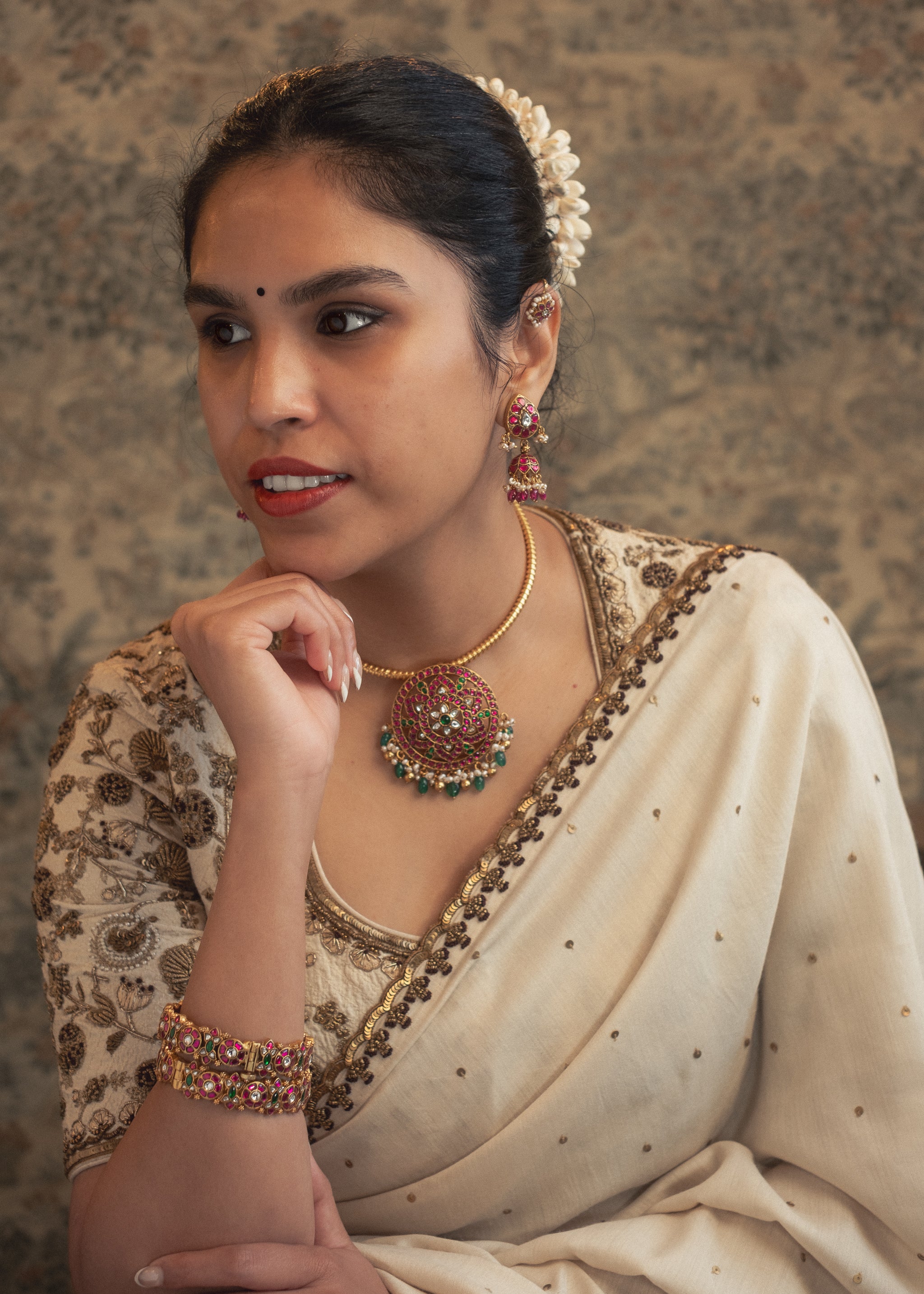
With Traditional Indian Wear — This is the classic pairing. Silver jhumkas with a silk saree, a cotton kurta, or a flowing anarkali suit creates an effortlessly put-together look. For weddings and festivals, go bigger and bolder. For everyday ethnic wear, smaller jhumkis keep things elegant and light.
With Western Outfits — This is where jhumkas really surprise people. A pair of silver jhumkas with a white linen shirt, a black turtleneck, or a simple sundress creates a striking contrast between modern simplicity and artisan detail. The key is to let the earrings be the statement piece — keep necklaces minimal or skip them entirely.
With Indo-Western Fusion — Jhumkas are the perfect bridge piece for outfits that blend Eastern and Western elements — think a silk skirt with a fitted top, or a long cape jacket with wide-leg pants. The earrings add cultural depth without overwhelming the look.
At Work — Smaller jhumkis and stud-top jhumkas are office-appropriate and add personality to professional outfits. They signal taste and individuality without being distracting.
Pro tip: If you're wearing your hair up or pulled back, jhumkas have maximum visual impact. They frame the face, catch the light, and move beautifully against an exposed neckline.
How to Care for Your Sterling Silver Jhumkas
Sterling silver is durable and long-lasting, but it does need a little love to stay at its brightest. Here's how to keep your pieces looking their best:
Wear them often. This might sound counterintuitive, but silver that gets regular wear actually tarnishes less. The natural oils in your skin act as a mild protective barrier, and the gentle friction of daily wear keeps the surface polished.
Store them properly. When you're not wearing your jhumkas, keep them in a cool, dry place — ideally in a soft pouch or lined jewelry box. Tossing silver into a humid bathroom drawer is the fastest route to tarnish. Adding a small piece of chalk or a silica gel packet to your storage absorbs excess moisture.
Keep them dry. Remove your earrings before showering, swimming, or exercising. Chlorine, saltwater, and sweat all accelerate tarnishing.
Apply products first. Put on your perfume, lotion, and hairspray before your jewelry — not after. These products contain chemicals that can dull silver over time.
Clean gently. If tarnish does appear, it's easy to fix at home. A soft polishing cloth is usually all you need. For heavier tarnish, a paste of baking soda and water applied gently with a soft cloth works wonders. Rinse with cool water and dry thoroughly.
Avoid harsh chemicals. Never use bleach, ammonia, or abrasive cleaners on sterling silver. They can permanently damage the surface.
Why One-of-a-Kind Matters
Mass-produced jewelry is everywhere. But there's something different about wearing a piece that was shaped by an artisan's hands — a piece where the tiny variations in the metalwork aren't flaws, but signatures.
Every sterling silver jhumka in our collection is handcrafted by skilled Indian artisans and exists as a one-of-a-kind piece. Once it's gone, it's gone. That's not a marketing line — it's the nature of true handcrafted work. No two pieces are identical, and each one carries the individual touch of the person who made it.
When you wear a handcrafted silver jhumka, you're wearing a small piece of a tradition that stretches back thousands of years — and you're supporting the artisans who keep that tradition alive today.
Ready to Find Your Pair?
Whether you're looking for a bold temple jhumka for a wedding, a delicate oxidized pair for everyday wear, or your very first set of jhumkas, we'd love to help you find the right piece.
Shop our Heirloom Earrings Collection
Have questions about styling or sizing? We offer complimentary virtual styling sessions to help you find the perfect match. Book yours here
Related Reading:
The Loving Good is a handcrafted sterling silver jewelry brand based in Florida, USA. Every piece is made by skilled artisans and ships from the United States with free domestic shipping.